
The Cost of Living Is Keeping Customers Away — Here's What Smart Workshops Are Doing About It
The Reality Nobody's Talking About Loudly Enough
Picture this: A customer you serviced six months ago is due back in. Their brakes need attention, your tech flagged it last visit. You haven't heard from them. You assume they'll call when they're ready.
They won't.
Not because they don't trust you. Not because they found someone cheaper. But because right now, they're quietly juggling a mortgage, rising grocery bills, and a power bill that made them stop and stare and a car service feels like something that can wait one more month.
This is happening in workshops across Australia right now, and most owners don't even know how much revenue is quietly walking out the door because of it.
The Numbers Are Hard to Ignore
A recent Canstar study found that 57% of Australian households delayed, reduced, or cancelled car-related expenses in 2025. Almost half admitted to skipping or postponing a scheduled service. And here's the one that should stop every workshop owner in their tracks: a quarter said they were neglecting safety-critical repairs like brake pads and tyres.
Not because they don't care. Because they're stretched thin.
Australian households are now spending around $452 per week on transport costs, nearly $100 more than five years ago. That's real money for most families. And when people are forced to prioritise, the car service they can't see, feel, or immediately notice often gets pushed back.
The problem is that deferred work doesn't disappear. It sits in your Workshop Management System (if you're logging it), or worse, it disappears entirely — and so does the customer, who quietly starts wondering if there's a cheaper option down the road.
This Isn't Just a Customer Problem. It's a Workshop Revenue Problem.
Here's where I want to get real with you for a second.
Most workshops I speak to are frustrated by customers declining work or not coming back. But when I dig into their process, the follow-up just isn't happening. The declined brake job from April? Nobody called about it. The service reminder for the customer who's now 3,000km overdue? It never went out.
I get it. You're flat out. There aren't enough hours in the day. Chasing up old jobs feels like the last thing on your list when there are cars on hoists right now.
But here's the thing: in a cost-of-living crunch, the workshops that win aren't the ones with the cheapest prices. They're the ones that communicate best.
What Customers Actually Need Right Now
When money is tight, people don't stop maintaining their cars entirely. They prioritise. And what influences those priorities more than anything else? Trust, clarity, and timing.
A customer who receives a friendly, well-timed message saying "Hey, we noticed your brakes were flagged last visit, just wanted to check in and see how the car's feeling" is far more likely to book in than a customer who hears nothing and assumes the work can wait indefinitely.
Customers aren't trying to avoid your workshop. They're trying to make informed decisions with limited budgets. Your job, or your team's job, is to give them the information they need to make those decisions confidently.
That means clear communication about urgency. There's a difference between "we recommend replacing your wipers" and "your brake pads are at a safety-critical level." When customers understand what's urgent versus advisory, they make smarter choices and they trust you more for being straight with them.
It means reminders that actually reach them. A note in a job card that nobody follows up on might as well not exist. Proactive outreach, a text, a call, an email, at the right moment can turn a deferred job into a booked appointment.
And it means making it easy to say yes. The more friction in the process, the easier it is for a customer to put it off. Workshops that get clear, itemised estimates in front of customers quickly are seeing better conversion on that deferred work.
So, What Is a Virtual Service Advisor?
Before we get into the how, it's worth a quick explanation for those who haven't come across the term before.
A Virtual Service Advisor (VSA) is a trained, remote team member who handles the administrative and communication side of your workshop. Think of everything that needs to happen around a job, not just on it. Booking the appointment, reviewing the service history beforehand, pre-triaging the job, sourcing and pricing parts, building out the quote, keeping the customer informed, chasing approvals, following up after the visit and re-booking the next one. A VSA does all of that, remotely, integrated directly into your existing systems and workflow.
They're not a call centre. They're not a generic VA. They're trained specifically in the automotive industry, fluent in the tools your workshop already uses, and focused entirely on making sure nothing falls through the cracks while you and your team stay focused on the work in the bays.
The best part? You turn on the tasks you need. Every workshop is different, so your VSA works the way your business works.
And just to be clear on something that comes up a lot: a VSA is not here to replace your service advisor. Your service advisor is one of the most valuable people in your business. But here's the reality of how most workshops operate, the customer standing at the counter with a $500 job is always going to take priority. As they should. That face-to-face interaction, building rapport, answering questions, getting that approval, that's exactly where your service advisor needs to be.
The problem is that while they're doing that (which is their highest leverage task), nobody is in the background properly prepping the next job, building out the full estimate, or following up on the customer who deferred $2,000 to $3,000 worth of work three months ago. That's not a criticism of your service advisor, it's just physics. There are only so many hours in a day and only so much one person can focus on at once.
A VSA fills that gap. They handle everything that happens around the job so your service advisor can focus entirely on the person in front of them, knowing the prep has been done, the numbers are ready, and the follow-up will happen without them having to think about it.
How a VSA Turns This Into a Workflow, Not a Wish
This is where it gets practical.
One of the biggest value-adds our VSAs provide is systematically working through declined and deferred work. Not in a pushy way, but in a structured, proactive way that treats customers like people, not invoice numbers.
Here's what it looks like when it's done right.
A customer leaves your workshop with a brake job deferred. The VSA logs it, sets a follow-up trigger, and a few weeks later that customer gets a message checking in on how the car's driving and gently flagging that the brake job is still on their record.
A customer who's 2,000km overdue for a service gets a personalised reminder that references their vehicle, their history, and why the service is due.
When a customer does book in, the job is fully pre-prepared before they even arrive. And this is where a lot of workshops are leaving serious money on the table without realising it.
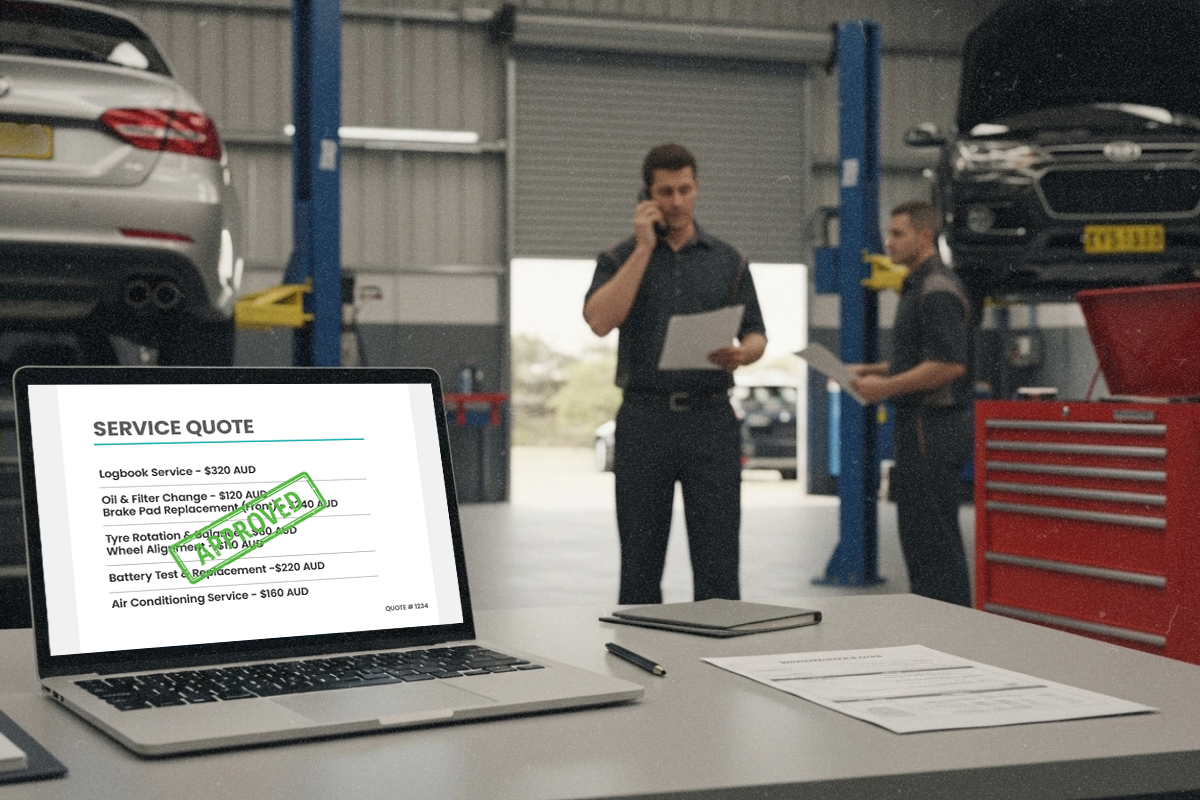
Before the customer walks through your door, your VSA has already reviewed the service history, flagged any previously declined work, pulled the logbook items that are due, and built out a complete, accurate quote. Not a rough figure from Smartquote using your supplier's recommended retail price. An exact quote built using your own pricing and your own margins, so you know exactly what you're making on every part before the conversation even starts.
That matters more than most people give it credit for. When you're presenting work to a customer who's already watching every dollar, the last thing you want is to be shuffling through pricing on the spot or realising mid-conversation that your margins aren't where they should be. Your VSA does that work in advance, so your service advisor walks into the check-in with the full picture, a clear number to present, and the confidence to walk the customer through it properly.
In a climate where customers are scrutinising every dollar, a service advisor who can confidently say "here's exactly what we're recommending and here's what it costs" will convert far more work than one who's guessing or working from retail pricing that eats into the business. That preparation is what turns a hesitant customer into an approved job.
The Opportunity in the Middle of the Pressure
Here's the truth that often gets missed. Cost-of-living pressure creates an opportunity for workshops that communicate well.
When customers are deferring work at competitor shops, or not going back because nobody reached out, the workshop that stays front of mind, follows up thoughtfully, and shows up to every conversation prepared is the one that captures that work.
You don't need to discount. You don't need a special promotion. You need a reliable, proactive system that keeps your customers informed, your pipeline full of booked appointments, and all that deferred revenue converted rather than forgotten.
The workshops doing this well right now aren't working harder. They've got the right people and systems in place to make sure nothing slips through the cracks, even when customers go quiet.
Ready to Stop Leaving Deferred Revenue on the Table?
Book a free session with myself at Workwise Auto Solutions. We'll show you how a VSA can systematically work through your declined and deferred work, keep your customers engaged, and build the kind of proactive communication that keeps your bays full, even when times are tough. Without replacing your current workforce.


